Thursday, May 6, 2010

Relaxed Andy Murray still believes he can look forward to a summer of success

There is still the best part of five weeks of the clay-court season to endure, but behind Andy Murray yesterday the temporary stands at Queen’s Club were being constructed to welcome its most powerful collection of tennis stars yet. The AEGON Championship trophy he defends next month was placed in front of him, a portent of polished times ahead, he believes.

Tomorrow, having planted his cross on a voting slip in a General Election for the first time — “The political debates have had me pretty much hooked,” he said — Murray heads off to the first of four tournaments where success for the British No 1 would help tennis to win a share of newsprint and air time during the nation’s fixation with the football World Cup.

The Mutua Madrileña Masters opens in Madrid next week, there are a few days’ rest before the French Open, back to Queen’s Club for his first grass-court defence, enduring the intensity of Wimbledon preliminaries that can exhaust a British prospect, and then it is time for the Championships themselves. It is a punishing schedule, particularly if he decides to play in the Davis Cup for Great Britain against Turkey the next weekend.

Honed and toned, Murray looked and acted yesterday as if he had not a care in the world. Those who follow him may be fretting at his lack of tournament endurance since reaching the Australian Open final in January, but his words had the effect of balm.“I’m not worried at all,” he said. “I’d rather have played more recently, but there were eight weeks between the tour finals last year and the Australian Open and I reached the final. I took five weeks off after Wimbledon last year and won Montreal. The year before that I took five weeks after the US Open and won Madrid and St Petersburg. It’s all about practising and training properly, and being in the best shape, because that’s what gives me confidence, by hitting thousands of balls. I am a good player, I know that.

“Since I was young I’ve known how to win and the right way for me to play, which has worked against the top players. I have a winning record against Federer, although the grand slams haven’t gone my way, I’ve won the last three times against Djokovic and against Nadal. I didn’t start very well [against Nadal] when I was younger, but since going 5-0 down, in the last five matches it’s been 3-2 to me.

“I will stick to the way I play because that’s the way I enjoy tennis. I recall being told by a coach at around 13 that, though people were saying I needed to be more aggressive, I should keep doing what I was doing but get stronger because then I would hit the ball harder. I need to improve my service speed and get bigger and therefore my ground strokes will be heavier with the same amount of effort I put in.”

The subject turned to football, and the World Cup and England. Murray, mindful of being trapped the last time he was asked about their prospects, answered in a manner that suggested the Scot may have a future in politics. “When England play in the World Cup and concede a goal, I’m not jumping up in front of the TV because I’m happy they are losing,” he said. “If one of my English friends is watching and England score, he’ll be on his feet yelling and screaming and, though I’m happy, it’s not the same sort of passion.

“If England lost, my friends will be deflated and disappointed and I will be, too. But I’m not cheering whoever England’s opponents are. That’s absolute ****.” Subject closed.

England lose opener to lone six after two ties

England began their defence of the women’s World Twenty20 with a rollercoaster thriller against Australia in St Kitts that ended in defeat on a boundary countback, after the match and the “super over” finished as a tie.

Chasing 104, Australia needed eight off the last over with a wicket in hand and looked on track when a no-ball from Charlotte Edwards was hit for four. But, with the scores level and three balls remaining, Rene Farrell was run out by Beth Morgan.

The super over finished with the teams both scoring six for two, but Jess Cameron’s six, hit off Holly Colvin, the England left-arm spinner, in the original run chase won the day for Australia as it was the only shot to clear the ropes in the contest.

England’s next two matches, against West Indies and South Africa, look easier on paper, but they must beware Deandra Dottin, the 18-year-old middle-order batsman, who made the fastest-ever Twenty20 century as West Indies beat South Africa by 17 runs. Dottin, who is a cousin of Ottis Gibson, the head coach of the West Indies men’s team, hit nine sixes in her 112 and reached her hundred in only 38 balls to help her side to 175 for five.

In the men’s World Twenty20, Australia suffered a scare in Barbados when batting against Bangladesh, but rallied to claim their place in the Super Eights. Mike Hussey rescued Australia from 65 for six, making 47 in 29 balls and steering his side to 141 for seven.

Bangladesh had to reach the target in 14.4 overs to knock Australia out on net run-rate, but lost four wickets in the first four overs and were dismissed for 114. Dirk Nannes took four for 18, with Hussey claiming three catches.

In the day’s other match, South Africa confirmed their place in the Super Eights with a comfortable 59-run victory over Afghanistan. The qualifiers did well to contain the South Africa batsman to a total of 139, but struggled against the pace of their bowlers and were 14 for six before being dismissed for 80 after 16 overs.

Second chance drives Ian Poulter to fight for the ‘fifth major’

Ian Poulter had a good chance of winning The Players Championship at Sawgrass last year, but ran into Henrik Stenson playing the best golf of his life.

Poulter eventually finished as a runner-up behind his Swedish Ryder Cup team-mate, but he is determined to go one better this year at a tournament regarded by the American players at least as the “fifth major”.

The Englishman has now established himself in the world’s top ten after his victory at the WGC Accenture Match Play Championship and does not look out of place in such exalted company. When he says he is here to win, people have to sit up and listen. In the past, some would have scoffed.

After it was suggested yesterday that the world No 6 would have accepted a top-ten finish at The Players Championship ten years ago, Poulter was quick to dismiss such a notion. “I wouldn’t have taken that,” he said. “I’m here to win, it’s as simple as that.“If you asked me that question every single week of the year, I’m going to give you the same answer. Yes I finished runner-up last year, but I want to win golf tournaments. I feel my game is good enough to win them.”

Poulter, who has recovered from a knee injury he suffered while playing basketball at home, goes into the first round today in the company of Tiger Woods and Hunter Mahan. The circus surrounding Woods can be a distraction but he is taking it in his stride. “To be honest, I don’t pay too much attention to my playing partners,” he said. “I try not to get engrossed in how they are swinging or how they are hitting the ball. Whether they are two over par, five under, seven under, I’m just out there to do my job.”

Poulter admitted he was surprised at how poorly Woods had played at Quail Hollow last week — when the world No 1 missed only his sixth halfway cut in 14 years as a professional — but suggested he would still be a threat.

“I think everybody was a little shocked last week,” he said. “But you can never write off the world No 1 at any stage. You need two shots, or an hour on the range, to find a swing thought which will get you through the week and all of a sudden you are out there winning tournaments. Whether it’s Tiger Woods or Phil Mickelson, those world No 1 and No 2 guys can turn it on quicker than anybody.”

Poulter also confirmed that he would not be playing at the Wales Open at Celtic Manor — venue of the Ryder Cup this year — next month because of his commitment to the PGA Tour in the United States. “I’d like to be there, but it doesn’t fit into my schedule,” he said. “I need to play a minimum of 15 events to keep my card here.”

About 50 players, agents and caddies helped Rory McIlroy celebrate his 21st birthday (and his first win on US soil) at a surprise party on Tuesday evening. Among them were Lee Westwood, Padraig Harrington, Sergio García, Martin Kaymer and Álvaro Quirós. Now that’s friends in high places!

The Sunday Times Sport Rich List: Racing drivers have formula to build fortunes

Footballers dominate the first Sport Rich List but the big money is made behind the wheel of an F1 car

You might expect the the richest sports people in the country to be footballers followed by golfers. Wrong.

The first definitive list of the wealthiest sporting stars in Britain and Ireland, published in the Sunday Times today, shows that motor racing dominates the top 15 places. If you want to get seriously rich in sport, get driving, preferably fast cars not little white balls.

True, top of the first Sunday Times Sport Rich List are two men who kick, or used to kick, a leather ball about the park. Dave Whelan has come a long way since he broke his leg while playing for Blackburn Rovers in the 1960 FA Cup final. Though Rovers lost 3-0 and the injury put Whelan’s career into decline, he used the £400 compensation he received to start a discount store. He went on to make a £190m fortune from the JJB chain of sports shops.

In second place is a footballer who manages to combine business with playing in a way no other British star can rival: David Beckham. His many sponsorships outstrip his earnings as a player to take his fortune to £125m.

Follow England in the World Twenty20

To launch Hawk-Eye, click here.

Follow England's progress in the World Twenty20 with our unbeatable live coverage.

Regular readers of these pages will know that Hawk-Eye provides the most detailed statistical cricket analysis online. Updated as the match progresses, its many features include animations of crucial deliveries, wagon wheel graphics illustrating a batsman's shots, pitch maps and bee hives depicting bowlers' line and length.

You can also test your powers of analysis against other readers in our predictor game and post your thoughts in our forum.The service is available on mobile phones, too. To receive the live scores and commentary, go to http://m.pulselive.com on your phone's browser or text the word CRICKET to 87700 for a link to our cricket page, then follow the link to the live commentary. Otherwise, click here to launch the Hawk-Eye scoreboard on your computer now.

Source:The Times

Wednesday, April 28, 2010

Shaken Roger Federer vows to bounce back from shock defeat by Ernests Gulbis

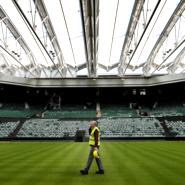
No sooner had he helped to cut the ribbon for the official opening of the towering new Centre Court at the Foro Italico yesterday than Roger Federer became its first conspicuous victim.
For the first time in seven visits here since he assumed the world No 1 ranking, Federer was hurried from the scene at the BNL d’Italia Masters as Latvia’s Ernests Gulbis reannounced himself as a class act.
Only last month, British tennis was lamenting the progress of Lithuania as a force as the Balkan nation won a Davis Cup tie between the countries, a result that cost the captain, John Lloyd, his job, prompted a review of priorities at home and was cited as one of the reasons why Andy Murray’s game suddenly went Awol. The signs last night were that Murray’s recovery process has begun with a vengeance, an emphatic 6-2, 6-4 first-round victory over Andreas Seppi, of Italy, halting a run of three consecutive defeats.
Murray served with particular aplomb to secure his place in the third round; Gulbis produced a succession of bullet-like deliveries that peppered Federer’s defences. The 21-year-old — ranked outside the top 100 last September — has recovered his teenage poise, surged to No 40 and his 2-6, 6-1, 7-5 victory as thunder rumbled, will cause the Swiss to stop and think about what he must do on clay to add to his 16-strong grand slam title collection when he starts the defence of his French Open crown in 3½ weeks.
If anyone can do it, Federer can. He is the master of compartmentalising defeats, steadying the ship and turning on the grace and style when it really matters, in best-of-five-set occasions. It was clear from watching him practise that the Swiss was loose and apparently unconcerned that he was shanking so many routine shots. Although he sped through the first set, the minute Gulbis sharpened his range-finder, he took great delight in imposing his game on the world’s best.
Gulbis needed seven match points to secure victory, six being squandered in the tenth game with a mixture of outrageously brave serving and monstrous mis-hits. “I was shaking, it was a terrible feeling,” Gulbis said.
But Federer’s serve had been hit and miss throughout the final set and he conceded the advantage Gulbis had given him right back to his opponent. The Latvian then served out to love.
“You cannot be 100 per cent all the time,” Federer said. “Sometimes it takes a loss like this to wake up and shake your mind. It can be that things are too simple, and days like this make you realise how difficult it is to dominate the tour. I didn’t feel safe at any time today, my game wasn’t up to its normal standard. Of course Roland Garros is in the back of my mind but I have two tournaments to get the wins I need. And I’m still in the doubles.”
Once you heard the first “C’mon” from Murray in the opening game against Seppi, there was a sense that his focus, so woolly in Monte Carlo the week before last, had returned. The movement was good, the serve clinical, the double-handed backhand had verve, his whole demeanour was enhanced. A good evening’s work.

Racecourses glimpse the benefit of free enterprise

Alan Lee says that free entry at nine racecourses, this week, challenges the entrenched belief that racing is an extortionate day out

The best ideas can be both simple and daring. Twenty-overs cricket restored innocence and spontaneity to a game suffering from lazy preconceptions that it could last forever and still end in stalemate. Free entry at nine racecourses, this week, challenges the entrenched belief that racing is an extortionate day out.
On early indications, free racing is working in just the way Twenty20 has done - by attracting a previously reluctant audience. This will not only shame those who scorned the initiative as worthless sham, it could also bring an overdue rethink on pricing policies, both in racing and other sports.
Sedgefield shut its gates last night, the little Co Durham track full to its 5,000 capacity for a meeting that drew 600 paying spectators in 2009. Mighty Ascot still has ample space today but is expecting 12,000, a 300 per cent increase on last year. Goodwood, Saturday's free fixture, is already a sell-out.
These are uplifting figures for the Racing For Change (RFC) group, which negotiated the barriers of timid pragmatism in securing enough willing courses to comprise a week of free meetings. Yet the overwhelming response asks more questions than it answers.
Jill Williamson, general manager at Sedgefield, confirms that the bumper crowd yesterday was “nearly all people new to racing - and we're turning plenty more away”. The theme is similar elsewhere. Surely, the something-for-nothing tendency cannot account for so many thousands?
The vast majority must have some interest in racing, even if it has been dormant for a generation or amounts to nothing more than idle curiosity. So the challenge is how to win them back again.
On Monday, I went to Towcester, where free entry was nothing new. The course pioneered the idea six years ago, when the place was a building site and it hardly seemed fair to charge. It was such a success that it continued when the new stand was complete.
Only its two biggest days - Boxing Day and Easter Sunday - now command an entry fee. This quiet Monday card drew 3,400 - 28 per cent up through the RFC marketing. True, Towcester is not like other courses. Independent in every sense, it has neither clogging committees nor demanding shareholders - and Lord Hesketh, its owner, is a self-confessed maverick. Yet there is nothing fanciful or philanthropic about throwing the gates open. The business plan is proven.
Kevin Ackerman, the young and enterprising general manager, explained: “This used to be a loveably run-down place and our locals had stopped coming. By getting people through the door, we can showcase the new facilities. You'll always get the odd freeloader trying to smuggle in a packed lunch but most people are happy to spend once they are inside.
“It has other spin-offs. Not everything is free here and I call it tiered racing. Some may come back to use the restaurants, or book a VIP box as a treat - we have a very good corporate product. Or they might think of us as a wedding venue.”
Final payments on the new stand and stabling are about to be made but Towcester still expects to return a profit of £400,000 this year. Understandably, Ackerman now wonders why other tracks - especially in the netherland of all-weather racing - do not follow its lead.
Sedgefield, certainly, are thinking of more free days. “We're targeting families,” Mrs Williamson said. “If we don't get younger people coming, the sport will disappear.” Even at Ascot, where decimal odds in the betting ring will also be trialled today, there is a sense of wonder about the take-up for free racing.
Up to yesterday morning, 8,500 tickets had gone out and Ascot will not charge any walk-up customers today. Charles Barnett, the chief executive, has a throat infection and little voice. But he still managed to croak two words. “Quite amazing.”
Source:The Times

search the web

http://sportsdesks.blogspots.com" id="cse-search-box">